

The Ice Fishing Game Demo usually loads the same icy reels, bonus icons, and win-line logic you would see in the full version, but it swaps money for practice credits. That makes it useful for anyone who wants to study the rhythm of the game before risking a balance. The theme can be busy, so the frozen-lake artwork is worth watching closely if you want to track symbols with confidence. If you are new to an Icefishing Demo, the first job is simply learning where the important information sits on the screen.
A good Ice Fishing Predictor begins with observation rather than bold claims, because demo sessions show how the game behaves over time. You can watch feature triggers, round spacing, and how often the bonus screen interrupts ordinary spins. That is more helpful than trying to guess a single result from one isolated round. This page explains the demo interface, common Ice Fishing Predictions, and the limits of short-term forecasting.
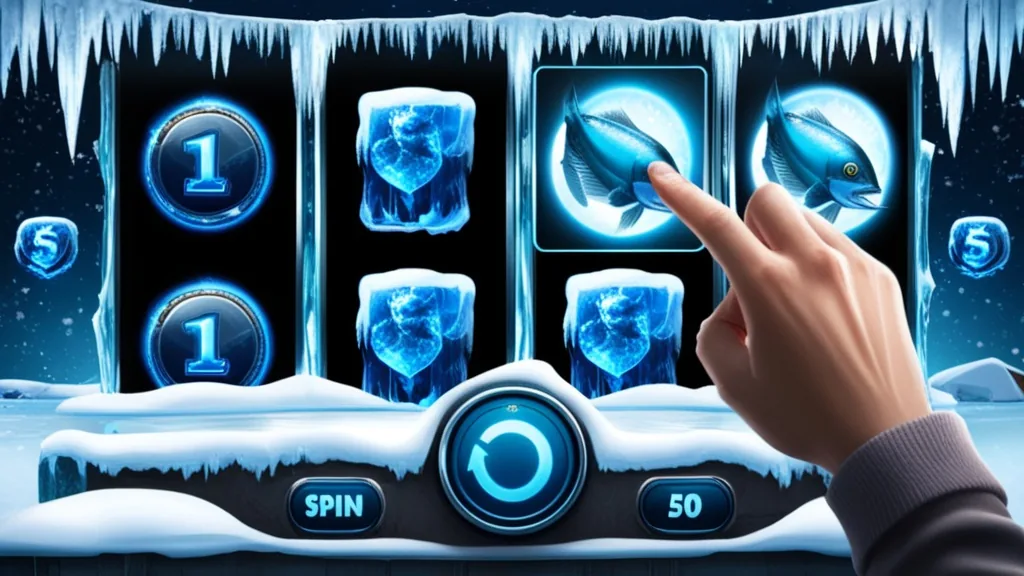
How the Ice Fishing Demo Game Works in Practice
The Ice Fishing Game Demo usually opens with the same reel layout and control panel you would expect from the full game, only the balance is virtual instead of real. That makes the first few spins useful for learning pace, symbol placement, and how quickly the reels settle. A demo session is most helpful when you treat it like a practice round rather than a search for instant wins. In that sense, the Icefishing Demo is closer to a walkthrough than a gamble.
A steady Ice Fishing Predictor mindset starts with basic mechanics, not with a forecast. You want to see whether the game reveals bonus symbols early, how often small wins appear, and whether the spin rhythm changes after a feature. Those details help you form smarter Ice Fishing Predictions later, because you are building context first. The demo is valuable precisely because it lets you observe all of that without pressure.
What do you see on the first spin?
On the first spin of an Ice Fishing Game Demo, the screen usually shows the bet controls, balance area, and symbol grid all at once. That is useful because you can immediately see where to check information before the next round starts. The first spin also tells you whether the game uses a quick stop or a slower reveal for special symbols. A careful Ice Fishing Demo Game review begins with those interface details, not with the result of the spin itself.
The opening spin also helps you judge the tone of the session, because some games feel calm while others feel feature-heavy from the start. That timing matters when people talk about Ice Fishing Result Prediction Today, since short sessions can be misleading if you only notice the most dramatic moment. By watching the first spin closely, you learn whether the game is setting a quiet pace or a lively one. That context makes any Ice Fishing Result Prediction note more honest.
Which parts are identical to the live game?
Most demos preserve the reel structure, symbol set, and bonus order, which means the Ice Fishing Prediction exercise is still based on the same visible mechanics. What changes is the stake environment, since virtual credits remove the pressure of real balance management. That allows you to focus on timing, trigger frequency, and feature depth instead of worrying about cost. If you compare the Icefishing Game Demo with live play, those shared mechanics are the real bridge between them.
The volatility profile often stays close to the original game as well, even if the demo feels calmer because no money is at risk. That matters because Ice Fishing Predictions should always account for quiet stretches and sudden feature bursts. You can study the tempo of wins, but you should not assume the demo is a promise of future outcomes. It is a practice model, not a guarantee engine for an Icefishing Predictor.
When is the demo most useful for practice?
The demo is most useful when you want to learn the game's pace before a session, especially if you are new to bonus-heavy mechanics. A few minutes in Ice Fishing Demo mode can teach you where the information sits and how quickly the reels settle. That saves time later because you already know what to watch when a real round starts. It also reduces the urge to overreact to one unusual outcome in an Ice Fishing Game Prediction discussion.
It is also helpful after a long break, because memory tends to soften the details of feature timing. Returning through the Ice Fishing Demo Game lets you refresh those details without pressure. If you are comparing sessions across days, you can note whether your expectations changed more than the game itself did. That habit makes any Ice Fishing Predictor style note-taking more grounded.
A simple practice routine works better than random clicking in the Ice Fishing Demo because the game reveals its behavior through repeated spins. Treat the first session as a survey, not a search for a miracle result. You are collecting clues about symbol spacing, bonus timing, and how quickly the pace changes. That is the cleanest way to make Ice Fishing Prediction notes that actually mean something.
- Start with ten to fifteen spins in the Ice Fishing Game Demo and watch the reel rhythm without changing settings.
- Note the first bonus trigger, even if it arrives late, because timing matters more than a single flashy win.
- Compare small wins to dead spins so you can see whether the session feels balanced or streaky.
- Switch on autoplay only after you have seen the manual pace of the Icefishing Demo.
- Write one short takeaway after the session, such as bonus frequency or symbol clustering, so future Ice Fishing Predictions are based on memory instead of guesswork.
If you repeat this routine, the Ice Fishing Predictor work becomes a habit instead of a hunch. A note about timing is often more valuable than a note about winnings. Over several demos, you start seeing what is stable and what only looked important in one session. That gives your Ice Fishing Game Prediction thinking a better foundation.
Ice Fishing Prediction Methods for Better Result Forecasting

The first rule of any Ice Fishing Predictor method is that it should describe what you can actually observe, not what you wish the reels would do. In demo play, that means looking at symbol frequency, feature spacing, and how quickly the balance display changes after each round. These clues do not force an outcome, but they help you understand the game's pace. A solid Ice Fishing Game Prediction routine starts with measurements, not superstition.
Players often use Ice Fishing Predictions as shorthand for reading momentum, but good forecasting depends on more than one session. A broader sample shows whether an unusual streak is part of normal volatility or just a short run of luck. That is why the demo is useful for building repeatable habits across different timings. It gives you a safer way to test Ice Fishing Prediction ideas before you trust them.
Can you forecast outcomes from reel behavior?
You can sometimes infer short-term rhythm from reel behavior, but not a fixed result, because Ice Fishing Result Prediction is limited by randomness. If the same bonus symbol appears near the same reel positions several times, you may have a pattern worth watching. Still, the game can break that pattern on the next spin without warning. Think of Ice Fishing Result Prediction Today as a way to estimate likelihood, not to lock in certainty.
The most useful forecast questions are simple ones, such as whether the session feels active or quiet. That kind of reading supports a practical Ice Fishing Prediction habit because it focuses on tempo instead of wishful outcomes. You are tracking the character of the round sequence rather than trying to name the exact next win. That distinction keeps Ice Fishing Predictions from becoming exaggerated promises.
How do players build a simple prediction routine?
A simple routine usually starts with a fixed number of demo spins and a short note after each block. In an Icefishing Demo, that might mean recording whether features appear early, late, or not at all. Once you have several blocks, you can compare them for consistency. That comparison is the practical side of an Ice Fishing Game Prediction process.
The second part is discipline, because a routine fails when a player changes rules every few rounds. The best Ice Fishing Predictor habits use the same sample size and the same observation points each time. That way, the notes describe the game instead of your mood. Over time, Icefishing Game Demo sessions become easier to compare because the method stays stable.
- Visual pacing
- How quickly reels settle and features appear
- Session sampling
- Several blocks of demo spins
- Symbol tracking
- Positions of bonus and high-value icons
- Timing notes
- When features hit during a session
Understanding Ice Fishing Result Prediction Today and Trends
When people say Ice Fishing Result Prediction Today, they usually mean a short window of expectation, not a long-term model. In practice, that window is shaped by what the current session has already shown: bonus timing, win rhythm, and the size of recent swings. The shorter the sample, the easier it is to misread normal variance as a signal. That is why Ice Fishing Predictions should be tied to the actual session length you are watching.
Trend reading in a game like this works best when you compare several recent blocks rather than obsessing over one win or miss. A Ice Fishing Game Prediction that ignores sample size can sound confident while being almost empty. Looking at trends does not remove randomness, but it gives you a clearer sense of whether the round sequence is calm or volatile. The demo version is useful here because it lets you observe without pressure.
What 'today' really means in prediction talk?
The word today usually points to the current session, not to a universal rule that applies to every player. A Ice Fishing Prediction for today should therefore be treated as a session snapshot. That snapshot may show a quiet start, a burst of features, or a middle stretch that resets expectations. None of those states guarantee the next few rounds, but they do guide your reading.
That is why Ice Fishing Result Prediction Today works better when it is narrow and specific. Instead of asking for a final answer, ask what the recent spins suggest about pace and feature spacing. If the game has just produced a bonus, for example, the immediate next rounds may feel different from the start of the session. A good Icefishing Predictor keeps that context in view.
How do streaks and volatility shape short-term reads?
Streaks matter because they change the way a session feels, even when the math underneath has not changed. A Ice Fishing Game Demo can show a cluster of small wins or a dry patch that seems more dramatic than it really is. Volatility then determines how strongly the balance moves during those clusters. If you ignore that swing, your Ice Fishing Predictions will feel sharper than they actually are.
Short-term reads become more reliable when you compare streaks against several earlier blocks. That makes the Ice Fishing Demo Game a better classroom than a single live run. You can see whether a feature came early by chance or followed a longer quiet period. Over time, that habit helps you avoid turning one Ice Fishing Result Prediction into a rule.
Best Ice Fishing Predictor Signals for Demo Game Analysis
The most useful Ice Fishing Predictor signals are the ones you can see several times in one session, not the ones that only appear once. In this game, that usually means bonus spacing, symbol clustering, and how long the reels take to move from one outcome to the next. Signals like those can help you describe the session's shape. They do not remove uncertainty, but they do make Ice Fishing Prediction notes more concrete.
A bad signal is often just a dramatic moment that your memory prefers over the actual sequence of spins. That is why Ice Fishing Predictions should be tested against repetition before you trust them. If a clue keeps showing up across different blocks, it deserves attention. If it only appears once, it may just be noise in the Icefishing Demo.
Which signals deserve attention first?
Start with signals that repeat cleanly, such as where bonus icons land and how often small wins appear between quiet spins. Those details are easier to track in an Ice Fishing Game Demo than in a rushed live session. They help you build a simple map of the round rhythm. A steady Ice Fishing Prediction habit depends on that kind of clean observation.
You should also notice whether features tend to arrive in clusters or spread out evenly. Clustered events can make a session feel active, while evenly spaced results can suggest a different rhythm altogether. Either way, Ice Fishing Result Prediction becomes more meaningful when you compare these patterns across several short samples. The goal is to describe the pace, not to invent certainty.
Which signals are usually misleading?
The most misleading signals are dramatic wins and near misses, because they draw attention without proving a repeatable pattern. In an Icefishing Game Demo, one flashy round can feel like a forecast, but it may be nothing more than randomness landing in a memorable place. The same is true for long dry spells if they are not repeated. An honest Ice Fishing Predictor keeps those moments in context.
Another misleading clue is the belief that a result is overdue just because several spins looked quiet. Games do not remember your frustration, even if the session feels personal. That is why Ice Fishing Predictions should always be attached to actual session notes, not to emotional pressure. If a clue cannot survive a second look, it probably should not drive your Ice Fishing Game Prediction.
How do you combine signals without overfitting?
Combine only a few signals at once, because too many observations can make the pattern look more certain than it really is. A practical Ice Fishing Demo review might use bonus spacing, symbol clustering, and recent win frequency as the whole checklist. Anything beyond that can blur the picture. The aim is to keep Ice Fishing Prediction notes readable.
Overfitting happens when you force the data to fit a story after the fact. If you do that, every session can look predictive in hindsight, which makes Ice Fishing Result Prediction Today less honest. A better approach is to write the same few cues each time and accept when they disagree. That kind of restraint is the strongest Ice Fishing Predictor habit.
When you want a quick checklist, focus on the clues that usually repeat across a Ice Fishing Demo Game session. These are the signals that are easiest to compare from one block of spins to the next. They help you decide whether a Ice Fishing Prediction note is worth keeping or should be discarded.
- Bonus icon spacing: note whether feature symbols appear in clusters or at long intervals in the Icefishing Demo.
- Small-win rhythm: track whether low-value hits are filling gaps between quiet spins.
- Reel stop timing: watch whether the reels feel slower before special features appear.
- Session length: compare early, middle, and late blocks instead of judging one isolated spin.
- Repeated layout cues: write down any symbol positions that show up more than once in the same Ice Fishing Game Demo.
If several of these cues line up, the Ice Fishing Predictor conversation becomes more grounded. If they do not, that is also useful information, because it means the session is not giving a clean short-term story. Either way, the checklist keeps Ice Fishing Predictions tied to what you can actually see.
Icefishing Demo Features, Interface, and Gameplay Overview

The Icefishing Demo interface is usually built around a central reel area with the bet controls and balance information placed nearby for quick checking. That layout matters because you want to read the screen while the game is moving, not after the spin is gone. In a theme like this, visual style can be very busy, so clarity becomes part of the experience. The best Ice Fishing Demo Game sessions are the ones where you can find settings and statistics without hunting for them.
Gameplay overview is easier when you treat the demo as a guided walkthrough of the full feature set. A Ice Fishing Game Demo often shows the same symbols, bonus screens, and win messages you would see in live play, which makes it useful for learning the interface. You are not just watching fishing-themed art; you are learning where the important signals appear. That is why the Ice Fishing Predictor mindset starts with layout familiarity.
How does the interface present bets, symbols, and balance?
Most screens keep the stake controls in one place so you can raise or lower them before the next round starts. In an Ice Fishing Demo, that makes it easy to compare changes without interrupting the flow of the game. The symbol panel usually dominates the center, while the balance sits where you can glance at it after each result. That arrangement helps Ice Fishing Prediction notes stay practical.
The layout also tells you how much the game wants your attention on pace versus detail. If the interface is crowded, you may need a few rounds just to learn where feature alerts appear. A clean screen makes Ice Fishing Predictions easier because you can follow the action without missing the context. That is a small detail, but it matters whenever you are testing an Ice Fishing Result Prediction idea.
What bonus features matter most in demo play?
Bonus features matter because they reveal the part of the game that usually changes the rhythm the most. In an Ice Fishing Game Demo, you can watch how often the bonus screen appears and whether it tends to follow a quiet patch or arrive unexpectedly. That tells you more than a single payout amount would. A thoughtful Icefishing Predictor note should focus on trigger timing first.
You should also pay attention to whether the bonus feels shallow or layered, since feature depth affects how players interpret the session. If the game offers extra picks, multipliers, or a special round, those elements can make the demo look more active than the base game. That is exactly why Ice Fishing Demo Game review work should separate base-spin behavior from feature behavior. Once you do that, your Ice Fishing Prediction notes become easier to compare.
Which settings help you review rounds faster?
Autoplay, spin speed, and sound cues can make a demo easier to review when you are trying to study the pace. In Ice Fishing Demo mode, a faster spin speed may help you gather data, while a slower one helps you spot timing details. The right setting depends on whether you want quantity or clarity. A balanced Ice Fishing Predictor habit uses both.
It also helps to leave the display uncluttered so you can focus on the things that repeat, not on decorative movement. The more clearly you can read each result, the easier it is to form a useful Ice Fishing Game Prediction note. Some players prefer one longer review session, while others use several short sessions to avoid fatigue. Either way, the interface should serve observation, not distract from Ice Fishing Predictions.
Ice Fishing Game Prediction Scenarios by Round and Timing

Round timing matters because the meaning of a spin changes when you know whether you are early, middle, or late in a session. A fresh Ice Fishing Game Prediction usually looks different from a mid-session read, because you have fewer clues at the start. As the block of spins grows, the pattern becomes easier to describe, even if it is not easier to predict exactly. That is why timing and sample size belong together in Ice Fishing Predictions.
The demo is a good place to test round-by-round scenarios because it lets you compare timing without risking balance. A Ice Fishing Result Prediction for the opening rounds should be modest, while later rounds may justify a more detailed note about feature spacing. The difference is not certainty; it is context. Once you understand that, Ice Fishing Prediction language becomes much more honest.
What changes in the opening rounds?
The opening rounds are mostly about orientation, because you are still learning the reel rhythm and the screen layout. In an Ice Fishing Demo Game, early spins can feel random simply because you do not yet have enough reference points. That is normal, and it is why opening-round notes should stay light. A sensible Ice Fishing Result Prediction Today usually begins as an observation, not a promise.
If the first few spins produce a feature or two, that can make the session look more active than it really is. You should record it, but not promote it into a full pattern after only a handful of results. The opening section of a Icefishing Demo is best used to mark pace, not to declare a trend. That keeps your Ice Fishing Prediction work from jumping too quickly.
How should you read the middle of a session?
The middle of a session is where comparisons become more useful because you have enough spins to see repeats. A Ice Fishing Predictor note at this stage can include whether features are clustering, whether small wins are filling the gaps, and whether the balance is swinging widely. Those clues may point to a lively or a calmer stretch. They still do not promise the next result, but they improve the quality of your Ice Fishing Predictions.
This is also the point where emotional bias can sneak in, because players often start expecting the game to behave a certain way. If you have seen one bonus and one dry patch, it is tempting to connect them into a story. The better approach is to keep writing what happens and avoid overreading each round. That discipline makes Ice Fishing Game Prediction notes much cleaner.
When does late-session timing matter?
Late-session timing matters when you want to compare how the game behaves after a long stretch of visible data. At that stage, an Ice Fishing Demo can show whether the session has been calm for a long time or whether it already had several feature bursts. You can then ask whether the most recent rounds are unusual relative to the rest of the block. That kind of comparison gives Ice Fishing Result Prediction language a clearer frame.
Even so, late-session patterns should not be treated as a hidden rule for the next spin. Games can shift pace quickly, and a late burst does not mean the next round must repeat it. The smartest move is to compare the last ten or fifteen spins with the session average. That keeps the Icefishing Predictor approach measured rather than dramatic.
How to Read Ice Fishing Predictions Without Common Mistakes

The most common mistake in Ice Fishing Predictions is turning a short sample into a fixed rule. A couple of lucky spins can make a session look more readable than it is, and a few quiet spins can do the opposite. The demo helps because it exposes those jumps without any balance pressure. That makes it easier to see how easily a Ice Fishing Game Prediction can become overconfident.
A careful reader looks for evidence that survives repetition, not for a clever-sounding answer that only works once. If you keep your notes tied to what happened recently, Ice Fishing Result Prediction Today becomes a session comment rather than a claim. That mindset protects you from reading too much into one moment. It is the simplest way to keep an Ice Fishing Predictor style review honest.
Why do people mistake samples for patterns?
People often see two or three similar outcomes and assume the game is revealing a hidden message. In an Ice Fishing Demo Game, that is easy to do because the visual theme makes every feature feel important. But a small sample can line up by chance, especially in short sessions. A grounded Ice Fishing Prediction approach waits for repeated evidence.
The same mistake happens when players remember the exciting rounds and forget the ordinary ones. That memory bias makes the session feel more structured than it really was. If you want better Ice Fishing Predictions, write down the quiet stretches as carefully as the bonus moments. The full record is always more useful than the highlight reel.
How can you keep predictions realistic?
Keep predictions realistic by using language that matches the size of your sample. After a short Icefishing Demo, it is fine to say the session felt active or slow, but not wise to claim a fixed outcome trend. That wording respects the limits of observation while still giving you something useful. A careful Ice Fishing Result Prediction is descriptive first and speculative second.
It also helps to compare one session with another before you draw any broader conclusion. If the pattern repeats across several Ice Fishing Demo Game blocks, you have a better case for calling it meaningful. If it does not, you should let the idea go. That habit keeps the Ice Fishing Game Prediction process flexible and accurate.